


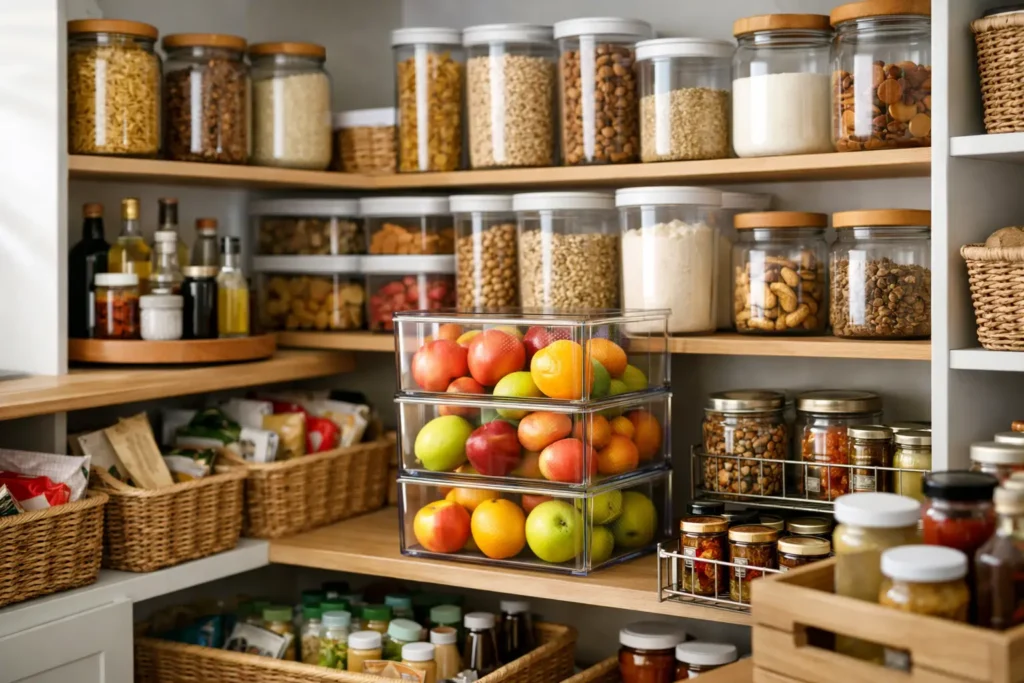
If your pantry makes you buy a third jar of paprika because the first two vanished behind a bag of rice, you’re in good company. The best easy pantry organization ideas are not about turning your shelves into a showroom. They are about making Tuesday-night dinner easier, grocery shopping less annoying, and snack time a little less chaotic.
A well-organized pantry does not require a weekend overhaul, a label maker obsession, or a cart full of matching containers. In most homes, the smartest fix is a mix of small changes that make your space easier to use. The trick is setting things up for real life, not for one perfect photo.
Easy pantry organization ideas that actually help
Start by paying attention to what causes the daily mess. For most people, it is not a lack of shelves. It is hidden food, mixed categories, and packaging that slumps, tears, and spills. Once you solve those three problems, the pantry usually starts behaving itself.
One of the easiest wins is grouping food by how you actually cook and snack. Put breakfast items together, even if that means oats sit next to pancake mix and cereal bars. Keep pasta, sauces, and canned tomatoes in one zone. Make a baking section that includes flour, sugar, chocolate chips, and sprinkles instead of scattering them wherever they fit. This sounds obvious, but it cuts down on the constant hunt for one missing ingredient.
It also helps to give kids their own snack area if you have a family pantry. A low shelf or bin with grab-and-go options can save the rest of the pantry from getting rummaged through five times a day. If your household is mostly adults, the same idea works for lunch stuff, protein snacks, or coffee supplies.
Use bins when they solve a problem
Bins are useful, but only when they earn their keep. They work especially well for pouches, seasoning packets, snack bags, and other small items that like to wander. A clear bin for chips, another for granola bars, and one for instant noodles can make a shelf look instantly calmer.
That said, bins are not magic. If you cram too much into them, they become mystery boxes. If they are too deep, food at the back gets forgotten. For a busy household, open-top bins that pull out easily tend to work better than fussy containers with lids.
The same goes for turntables. They are fantastic for oils, vinegars, sauces, and nut butters, especially in a corner where things get lost. They are less helpful for tall, tippy items or anything packed so tightly you have to unload half the shelf to spin it.
Decant selectively, not religiously
Pouring everything into matching jars can look great, but it is not always practical. Dry goods you use often, like flour, sugar, rice, oats, and pasta, are usually worth decanting because the original bags are bulky or messy. Clear containers also let you see what is running low before you start dinner and realize your breadcrumb situation is mostly hopes and crumbs.
But not every item needs a new home. Crackers, cereal, and specialty grains sometimes stay fresher in their original packaging, especially if you do not use them quickly. A good middle ground is to decant the foods that create the most mess and leave the rest alone.
If you do use containers, pick shapes that fit your shelves instead of whatever looks cutest online. Square and rectangular containers usually waste less space than round ones. Wide openings also make scooping easier, which matters a lot more than aesthetics once you are baking in a hurry.
Make the pantry easier to see
A surprising number of pantry problems are visibility problems. When you cannot see it, you do not use it. Then it expires quietly behind a box of stuffing mix from two Thanksgivings ago.
Shelf risers can help with canned goods, jars, and shorter items. They create a stadium effect so nothing disappears behind the front row. This is one of those easy pantry organization ideas that feels almost too simple, but it works because it uses vertical space without making your shelves harder to reach.
Under-shelf baskets can also be handy if your pantry shelves are tall. They give lightweight items like napkins, bread, or extra snack packs a place to live without stacking them into a teetering tower. Just do not overload them, or they become the pantry version of a junk drawer.
Another smart move is keeping the most-used foods between waist and eye level. Prime shelf space should go to the stuff you reach for all the time. Baking extras, backstock, and once-in-a-while ingredients can live higher up or lower down. It is a small adjustment, but it makes the pantry feel more cooperative right away.
Stop letting backstock take over
Bulk shopping can save money, but only if your pantry can handle it. Otherwise, backup ketchup, six cans of beans, and a jumbo bag of pretzels start colonizing every shelf.
If you buy extras, create one clearly defined backstock area. Keep only overflow there, and store one open or active item in the main zone where you use it. That way, you are not juggling three half-used boxes of pasta while two unopened ones hide in the shadows.
This is also where a basic first-in, first-out habit helps. Put newer items behind older ones so the older food gets used first. It is not glamorous, but it cuts waste and keeps your pantry from turning into an accidental time capsule.
Labels help, but they are not the whole game
Labels are useful because they remove hesitation. When everyone in the house knows where snacks, grains, and canned soup belong, there is a much better chance things make it back to the right spot.
Still, labels cannot fix a bad system. If the baking shelf is crowded, hard to reach, or mixed with random extras, even the prettiest labels will not save it. Set up the zones first, then label bins or containers if it makes the system easier to maintain.
And keep the labels plain. This is a pantry, not a museum exhibit. Simple words like Pasta, Snacks, Breakfast, and Baking are plenty.
Give awkward items a plan
Some pantry clutter comes from oddball items that do not stack nicely. Potatoes, onions, paper towel rolls, reusable lunch bags, and water bottles all create visual chaos when they get shoved in wherever there is room.
This is where a few practical boundaries make a big difference. Use a basket for onions and garlic if your pantry stays cool and dry. Stand cutting boards and trays upright with a divider. Corral lunch containers or food storage lids in one dedicated spot instead of letting them migrate shelf to shelf.
If your pantry also acts as a utility closet, be honest about that. There is nothing wrong with storing a few household extras there, but keep food and nonfood items separated. Dish soap next to cereal is how pantry spaces start feeling messy, even when technically nothing is out of place.
Small pantry? Think in layers
A small pantry needs to work harder, but it does not need to be perfect. Door-mounted racks can add instant storage for spices, wraps, or small jars. Stackable bins can create levels for snacks and canned goods. Narrow shelves can hold a surprising amount if you avoid overfilling them.
In a tiny space, editing matters more than buying organizers. If you keep five kinds of chips, three half-used baking mixes, and novelty sauces nobody likes, no container in the world is going to fix that. Sometimes the most effective organizing step is simply keeping less in the pantry at one time.
The reset that keeps it all from falling apart
Even the best pantry systems drift. Life gets busy, groceries get shoved in fast, and suddenly the crackers are with the canned beans again.
What keeps a pantry organized is a quick reset routine, not heroic effort. Once a week, take two or three minutes to toss empty boxes, straighten the bins, and move stray items back to their zones. Once a month, scan for expired food and wipe up crumbs before they become a full-blown shelf ecosystem.
This is the part people skip because it feels too small to matter. But little resets are exactly why some pantries stay useful and others slide back into chaos.
If you want a pantry that works, aim for easy to maintain, not impossible to mess up. A few bins, a few zones, and a little honesty about how your household really uses food will take you farther than a picture-perfect system you cannot stand maintaining. The best setup is the one that still makes sense when you are tired, hungry, and looking for the cinnamon with one eye open.